
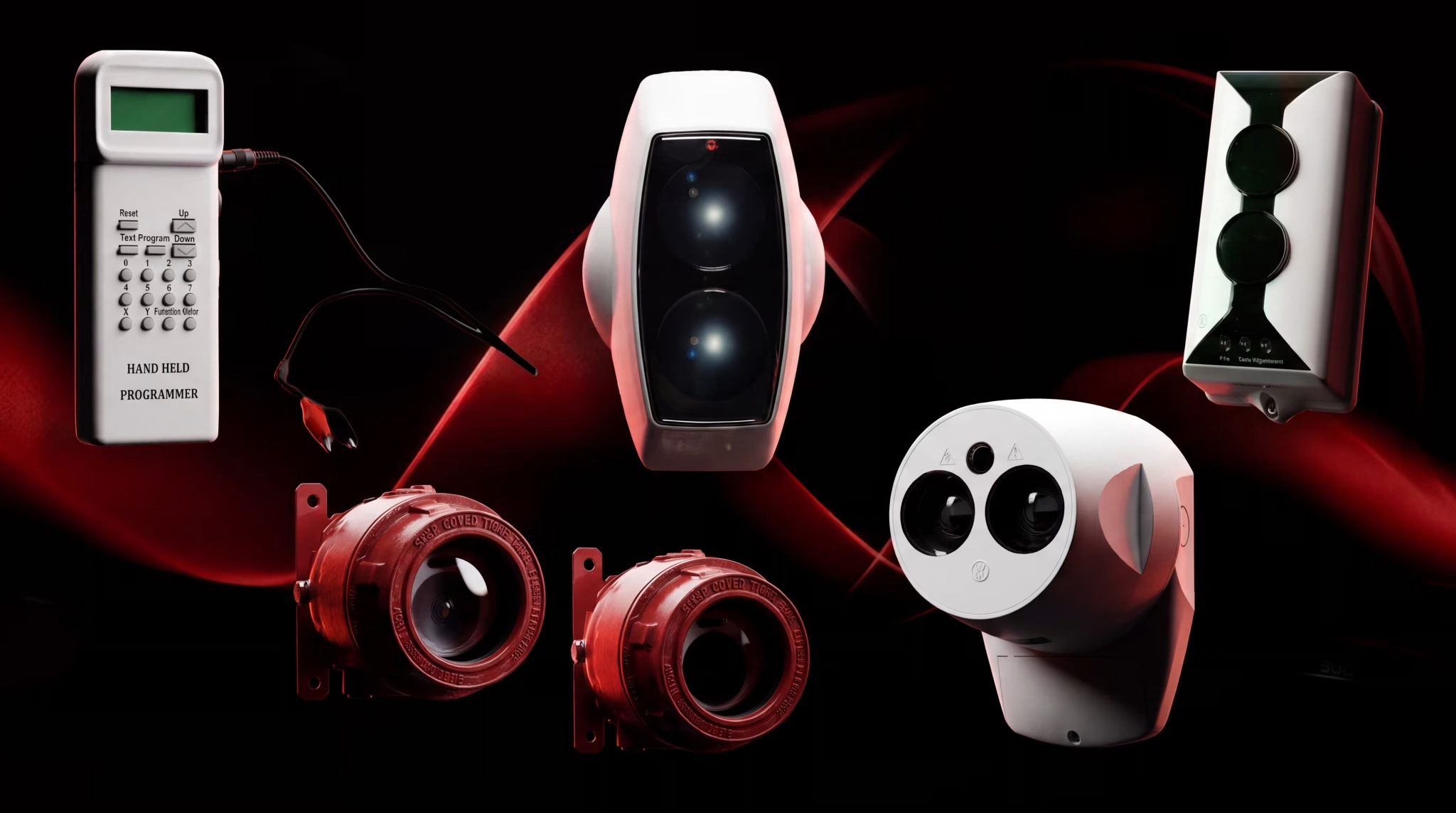
Beam smoke detectors cover large, high spaces with a single invisible infrared beam. When smoke crosses the beam, the signal weakens and the detector raises an alarm. One pair of units can replace many ceiling detectors.
This makes beam smoke detectors popular in atria, warehouses, sports halls and historic buildings. In this guide, we explain how they work, where they fit best and how to keep them reliable.
How do beam smoke detectors work?
A beam detector measures how much light reaches a receiver. In normal conditions, the receiver sees a strong, steady beam. Smoke between the units absorbs and scatters part of the light. The received signal then drops.
When the drop passes an alarm threshold, the detector reports a fire. Also, slow changes, such as dust building up, are compensated automatically. Fast changes, such as a person walking through, are filtered out.
Two types: end-to-end and reflective
Beam detectors come in two common layouts.
| Layout | How it is built | Best for |
|---|---|---|
| End-to-end | A transmitter on one wall and a receiver on the opposite wall | Long ranges and difficult conditions |
| Reflective | One unit holds transmitter and receiver, and a reflector sits opposite | Easier wiring, because all cables stay at one end |
Reflective detectors are quick to install. As a result, they are often the first choice in retrofit projects.
Where are beam smoke detectors used?
- Atria and shopping centres, where ceilings are far above the floor.
- Warehouses and distribution centres, where racking blocks access to the ceiling.
- Sports halls, theatres and exhibition halls, where a clean look matters.
- Churches and heritage buildings, where drilling many holes is unacceptable.
- Aircraft hangars and factories with high roofs.
See how this fits retail spaces and museums and heritage sites.
Installation tips for reliable beam detection
- Fix the units to stable surfaces. Building movement can misalign the beam, although many detectors correct small shifts.
- Mount below the ceiling. Hot air layers near the roof can delay smoke, so follow the height rules in EN 54-14 and local codes.
- Keep the beam path clear. Cranes, signs and stored goods can block it.
- Avoid strong light sources. Direct sunlight or lamps shining at the receiver can cause faults.
- Follow the standard. EN 54-12 covers line smoke detectors that use an optical beam.
After installation, align carefully and test with the filters that the manufacturer provides.
Advantages and limits
Advantages
- Covers a large area with few devices.
- Cuts installation and maintenance time at height.
- Suits spaces where ceiling-mounted devices are hard to reach.
Limits
- It needs a clear line of sight between the units.
- Very high spaces may suffer from smoke stratification, so design must consider it.
- Steam and heavy dust can trigger false alarms in some areas.
When a beam detector is not suitable, aspirating smoke detection or addressable point detection may work better.
Key takeaways
- Beam smoke detectors cover large, high spaces with one infrared beam.
- Reflective beam smoke detectors keep all cabling at one end of the beam.
- A clear beam path and stable mounting are essential for reliable operation.
- Combine beam smoke detectors with other technologies where stratification is likely.
Frequently asked questions
How far can a beam smoke detector cover?
Range depends on the model. Many detectors cover distances of several tens of metres, and some reach 100 metres or more. Check the data sheet and the local design rules.
Do beam smoke detectors cause false alarms?
They are stable when installed correctly. Birds, cranes and sunlight can cause problems, so a good site survey and a clear beam path are important.
Can beam detectors work in cold or hot areas?
Many models work across wide temperature ranges. Always compare the operating range on the data sheet with the conditions on site.
Learn more on our beam detection page. For general background on smoke detection, read this smoke detector overview.