
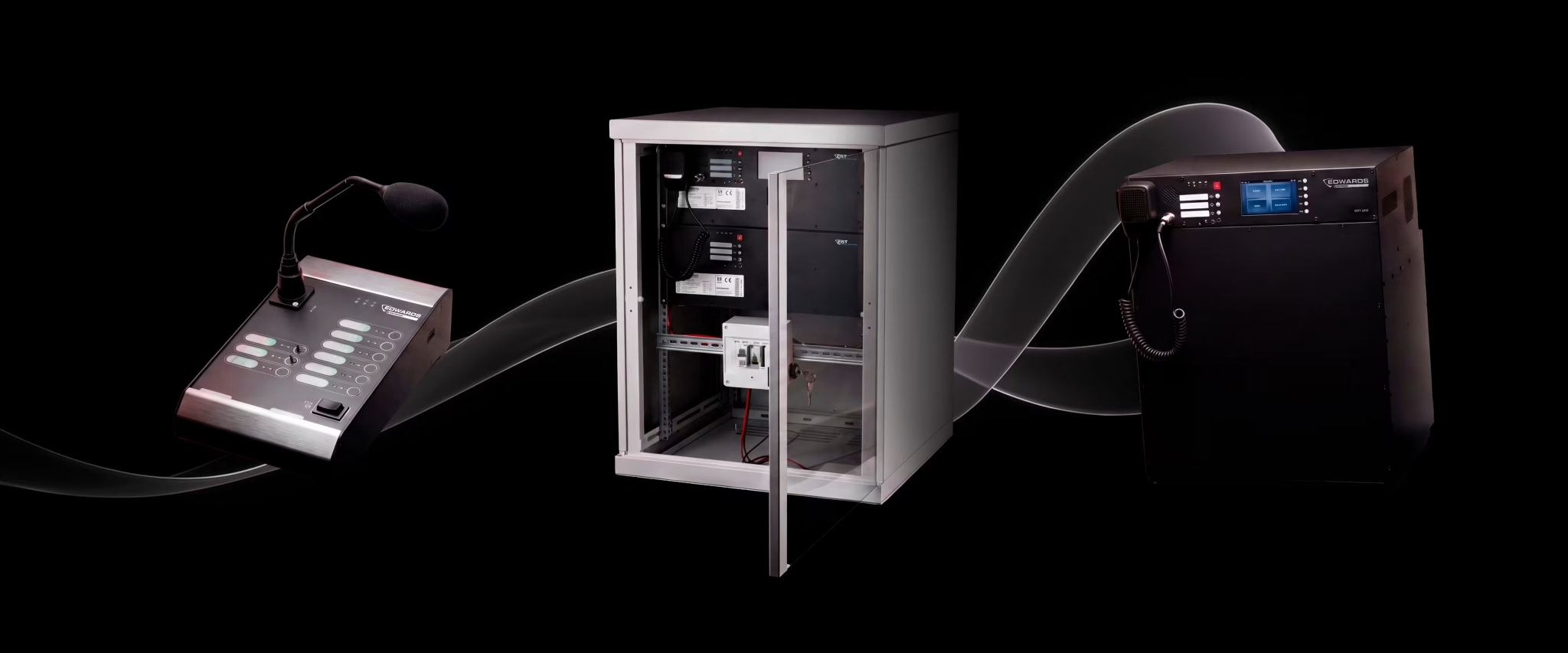
Voice alarm systems broadcast clear spoken messages and alert tones during a fire. Also, they link directly to the fire alarm panel. Instead of a simple bell or siren, people hear exactly what to do and where to go.
Clear speech improves evacuation in large or complex buildings. In this guide, we explain how voice alarm systems work, which standards apply and what good design looks like.
How do voice alarm systems work?
A voice alarm system has four main parts:
- Control equipment that receives the fire signal and decides which messages to play and where.
- Pre-recorded messages and tones, often in several languages.
- Amplifiers that power the loudspeaker lines.
- Loudspeakers placed so that speech is clear in every zone.
When the fire alarm panel signals a fire, the voice alarm controller starts the right message in the right zones. Staff can also use an emergency microphone for live instructions.
Why use voice instead of sounders alone?
A sounder tells people there is a problem. A voice message tells them what to do. This difference matters in places where people do not know the building, such as airports, malls, hospitals and stadiums.
- Messages can guide people to the safest exits.
- Phased evacuation sends the floors at risk out first.
- Different languages help international visitors.
- Clear instructions reduce panic and speed up evacuation.
Standards and requirements
In Europe, several parts of EN 54 apply to voice alarm systems:
- EN 54-16 covers voice alarm control and indicating equipment.
- EN 54-24 covers the loudspeakers.
- EN 54-4 covers the power supply and its batteries.
Speech must also be intelligible. Also, designers measure this with a speech transmission index, and local codes set a minimum value. In addition, the system must monitor its own lines, amplifiers and loudspeakers so a fault appears at once.
Design tips for clear evacuation messages
- Divide the building into zones that match the fire alarm zones.
- Place loudspeakers close together at a lower power, rather than a few loud ones. This improves clarity.
- Plan for noisy areas. Plant rooms and kitchens may need extra devices or visual alarms.
- Keep messages short and tell people what to do first.
- Test intelligibility in the finished building, not only on paper.
Visual alarm devices help people who cannot hear, so many projects add them.
Voice alarm and evacuation from Edwards
Edwards offers evacuation solutions that integrate with its fire detection systems. Also, learn more on our public address and voice alarm page and on the Edwards brand page. For the base of the system, also read our guide to the EN 54 standard.
Key takeaways
- Voice alarm systems tell people what to do, not only that there is a problem.
- EN 54-16 and EN 54-24 cover the control equipment and the loudspeakers.
- Speech intelligibility matters more than loudness.
- Test the finished building, not only the design.
Frequently asked questions
What is the difference between PA and voice alarm?
A public address system broadcasts everyday announcements. A voice alarm system is certified for emergency use and supervises its own equipment. Many projects combine both.
Do voice alarm systems need battery backup?
Yes. Also, emergency systems need a backup power supply that keeps them running during a mains failure. Local codes set how long.
Can a voice alarm system play messages in several languages?
Yes. Most systems store several messages and can play them in sequence or in selected zones.
For general context, read about public address systems.