
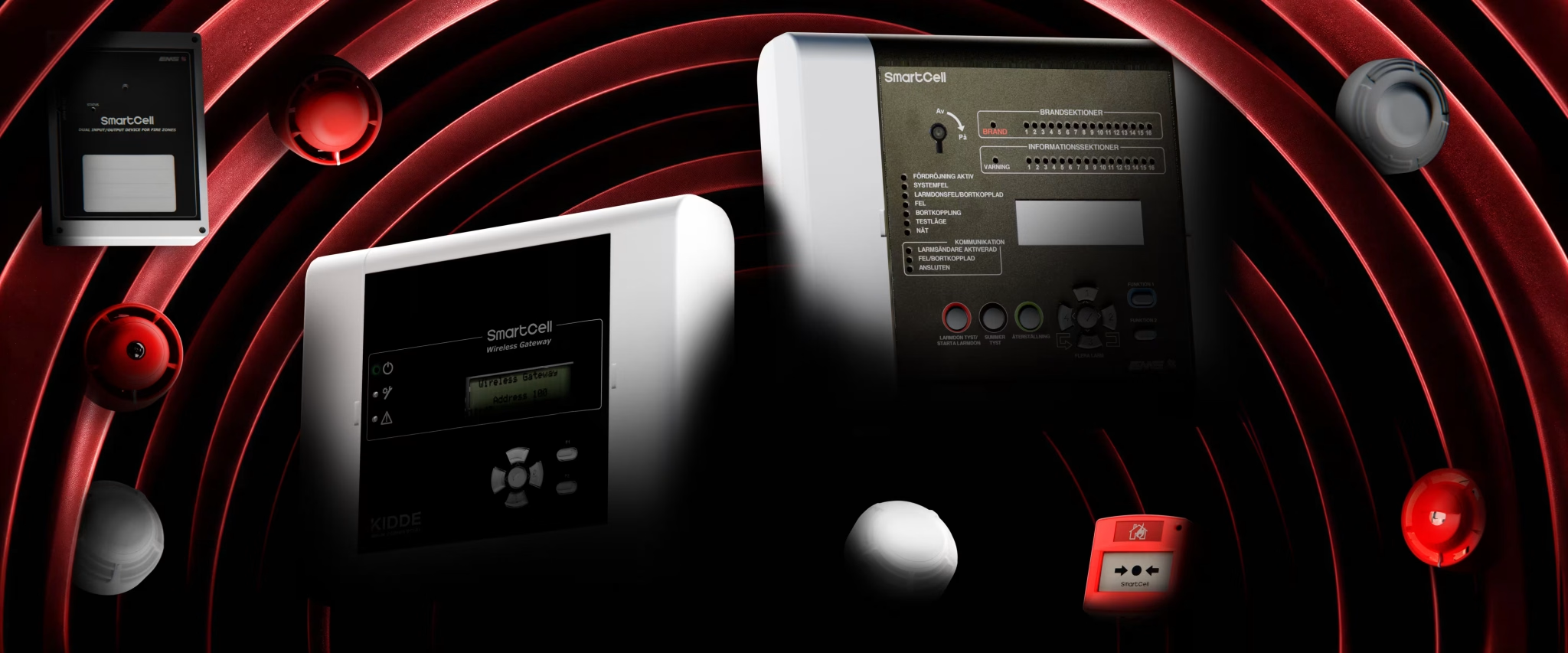
A wireless fire alarm system uses radio signals instead of cables to connect detectors, call points and sounders to the fire alarm panel. Also, devices run on batteries and talk to a gateway or a panel. The system works like a wired one, yet it needs far less building work.
This is valuable in heritage buildings, occupied sites and temporary structures. In this guide, we explain how the technology works, where it fits best and what you should check before you choose it.
How does a wireless fire alarm system work?
Each wireless device has a radio transmitter and a battery. When a detector senses fire, it sends an alarm message by radio. A gateway or a wireless-ready panel receives the message and passes it on to the main fire alarm system.
The system also watches itself. Also, devices report their battery level and send regular health signals. If a device goes silent or the radio link weakens, the panel shows a fault. This supervision is a key requirement for fire alarm equipment.
Wired and wireless fire detection compared
| Topic | Wired system | Wireless system |
|---|---|---|
| Installation | Cable routes, drilling and making good | Fast, with little disruption |
| Flexibility | Moving a device means new cabling | Devices can be moved or added easily |
| Power | Powered by the loop or zone | Battery powered, so batteries need planned replacement |
| Best for | New builds and large sites | Retrofits, heritage buildings and temporary sites |
Many projects mix both. A wired core covers the main building, and wireless devices cover difficult areas.
Where does a wireless fire alarm system fit best?
- Historic and listed buildings, where drilling walls and ceilings is not allowed.
- Occupied buildings such as hotels and hospitals, where building work disrupts people.
- Temporary sites, including construction sites and events.
- Extensions and refurbishments, where an existing system needs a few more devices.
Read how this applies to museums and galleries and healthcare buildings.
What to check before you install a wireless fire alarm system
- Run a radio survey. Concrete, metal and thick walls reduce signal strength.
- Plan the battery life. Choose devices with long battery life and schedule replacements.
- Check the standard. EN 54-25 covers components that use radio links in fire alarm systems.
- Plan for interference. Quality systems use protected frequencies and supervise every link.
- Plan the gateway. Decide how the wireless network connects to the main panel.
Good surveys reduce faults. Therefore, never skip this step, even in small buildings.
Wireless solutions from Kidde Global Solutions
The EMS brand specialises in wireless fire detection. In addition, the Excellence SmartCell gateway from Kidde Commercial connects EMS wireless devices to the Excellence addressable loop. This lets a single panel manage wired and wireless devices together. Learn more on our wireless fire detection page and on the EMS brand page.
Key takeaways
- A wireless fire alarm system removes the need for new cables and speeds up installation.
- Quality systems supervise every device, battery and radio link.
- A radio survey before installation prevents most problems later.
- Wired and wireless devices can share one fire alarm system.
Frequently asked questions
Is a wireless fire alarm system as reliable as wired?
Quality wireless systems supervise every device and every radio link, and they meet the EN 54-25 standard. Reliability then depends on a proper survey and good maintenance.
How long do the batteries last?
Battery life depends on the device and the settings. Many devices run for several years. Check the data sheet and plan replacement before the battery ends.
Can wireless and wired devices share one panel?
Yes. A gateway lets wireless devices join a wired loop or panel, so one system can manage both types.
For general background, read about wireless mesh networks, which some wireless fire systems use to extend range.