
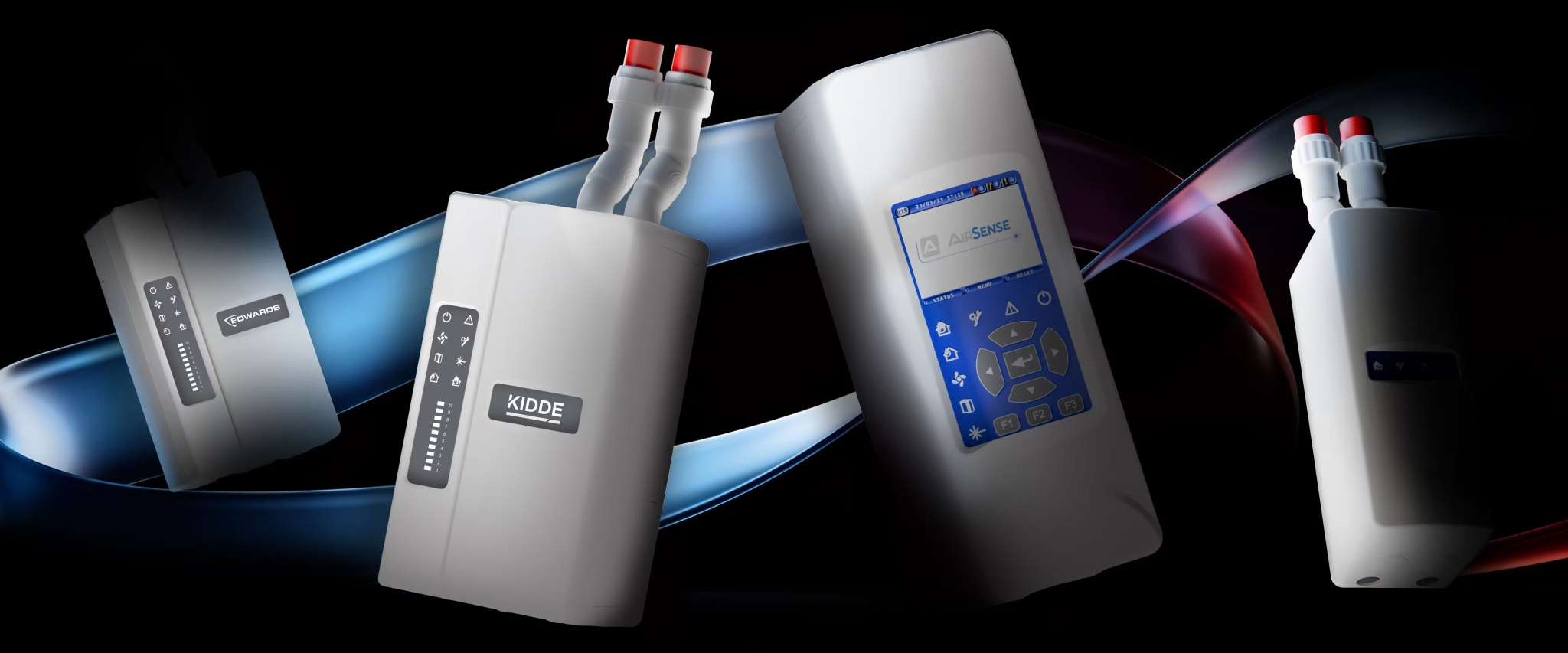
An aspirating smoke detector does not wait for smoke to reach it. Instead, it draws air from the room through a network of small pipes and analyses that air all the time. As a result, it can spot the first traces of smoke long before a fire develops.
This makes the aspirating smoke detector a favourite for data centres, cleanrooms, warehouses and heritage buildings. In this guide, we explain how it works, what its parts do and when it is the right choice.
How does an aspirating smoke detector work?
The system has three main parts. First, a pipe network with small sampling holes collects air from the protected space. Second, a fan inside the detector pulls that air along the pipes. Third, a very sensitive sensing chamber measures the particles in the air.
Most modern units use a laser to count smoke particles. When the particle level rises above a set value, the detector raises an alarm. Because the air is sampled all the time, the detector reacts to smoke at the very start of a fire. Often this is during the smouldering stage, long before flames appear.
The main parts of an aspirating smoke detector system
A typical system is simple to understand. The table below shows each part and its job.
| Part | What it does |
|---|---|
| Sampling pipes | Carry air from the room to the detector, often through a network of branches |
| Sampling holes | Take in air at set points, each one working like a point detector |
| Fan or aspirator | Pulls a steady flow of air through the pipes |
| Filter | Removes dust before the air reaches the sensing chamber |
| Sensing chamber | Measures smoke particles, usually with a laser |
| Display and relays | Show alarm levels and send signals to the fire alarm panel |
For example, the ModuLaser system combines display modules with detector modules on one network. Each detector module can serve up to 250 m of sampling pipe.
Why is this technology so sensitive?
There are three reasons. First, the detector measures real particle levels, so it can see very small changes. Second, the air is concentrated in a sensing chamber, so even thin smoke becomes measurable. Third, the system can use several alarm levels, such as alert, action and fire.
Sensitivity alone is not enough, however. Good systems also learn the normal dust level of the room. Smart software then ignores that background and reacts only to real smoke. In this way, the detector keeps high sensitivity without constant nuisance alarms.
Where should you use an aspirating smoke detector?
An aspirating smoke detector works best where early warning matters or where normal detectors struggle. Common examples include:
- Data centres and server rooms, where a small fire can stop a whole business.
- Cleanrooms and laboratories, where strong airflow dilutes smoke quickly.
- High ceilings and warehouses, where smoke may never reach ceiling detectors.
- Cold stores, where low temperatures affect point detectors.
- Heritage buildings and museums, where the owner wants to keep the interior intact.
You can read more about these sites on our pages for data centres and museums and galleries.
Aspirating smoke detector or normal smoke detector?
Normal point detectors are fine for most rooms, and they cost less. However, an aspirating smoke detector gives earlier warning and copes with hard conditions. So the choice depends on the risk. If a fire would cause high losses or long downtime, early warning pays for itself. We compare both technologies in detail in our guide on aspirating vs point detectors.
How do you choose the right system?
Start with the room and the risk. Then check these points:
- Size of the space. Large sites need a system that supports long pipes and many holes.
- Sensitivity class. EN 54-20 defines Class A, B and C. Read our guide to EN 54-20 classes.
- Environment. Dust, cold and airflow all affect the design.
- Panel connection. The detector must report clearly to the fire alarm panel.
- Support. Pipe design, commissioning and maintenance should be easy.
Kidde Global Solutions offers ModuLaser for large, complex sites and MiniLaser for compact spaces.
Key takeaways
- An aspirating smoke detector pulls air through pipes to a very sensitive sensor.
- It detects smoke at the earliest stage, often before a fire develops.
- It suits data centres, cleanrooms, high ceilings, cold stores and heritage sites.
- Choose the system by room size, sensitivity class and environment.
Frequently asked questions
What is the difference between an aspirating smoke detector and a point detector?
A point detector waits for smoke to reach it. An aspirating smoke detector actively pulls air through pipes to a sensor, so it detects smoke earlier and works in harder conditions.
Is it the same as VESDA?
Aspirating smoke detection is the general technology. Several manufacturers build systems with this principle, including the ModuLaser and MiniLaser ranges from Kidde Global Solutions.
How far can the sampling pipe run?
It depends on the product. For example, one ModuLaser detector module supports up to 250 m of sampling pipe. Always follow the design rules of the system you choose.
Does an aspirating smoke detector need maintenance?
Yes. Also, you should test the system, check the airflow and replace the filter as the maker advises. Regular checks keep the sensitivity and the airflow correct.
Kidde Global Solutions supplies aspirating smoke detection through Kidde Commercial, Edwards and AirSense. Learn the basics in our article What is aspirating smoke detection? or visit the aspirating smoke detection systems page.