
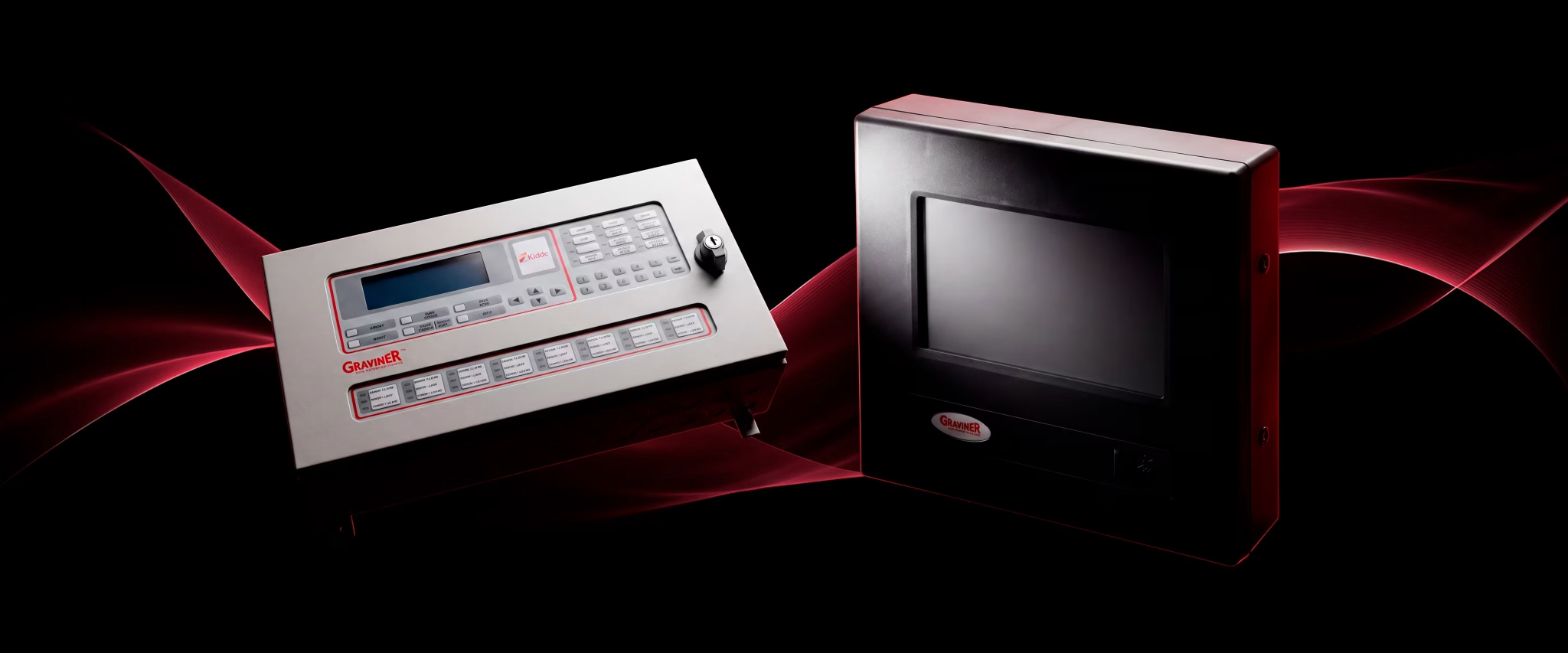
Oil mist detectors protect large engines from crankcase explosions. They watch the air inside the engine crankcase and warn the crew when oil mist builds up. That warning can give them time to slow or stop the engine before a dangerous situation develops.
This is a core safety system on ships and a useful one in power plants. In this guide, we explain how it works, why it matters and what to consider when choosing a system.
Why do crankcase explosions happen?
Large diesel engines hold lubricating oil in the crankcase. If a bearing or another moving part overheats, it can vaporise some of the oil. The vapour then cools and forms a fine oil mist.
When the mist reaches a certain concentration, a hot spot can ignite it. Also, the result is a crankcase explosion, and this can injure crew and destroy the engine. Detecting the mist early breaks this chain of events.
How do oil mist detectors work?
The system draws air from the engine crankcase through small tubes. Also, each tube comes from a different engine compartment. The air passes through a measuring chamber inside the detector.
- An optical sensor measures how dense the mist is.
- The detector compares the reading with the normal level for that engine.
- If the level rises too fast or too high, the system raises an alarm.
- Because the system checks each compartment, it can show where the problem is.
The alarm usually goes to the engine control room and to the safety system. Operators can then reduce the engine load or stop it.
Where are these detectors used?
- Ships and offshore vessels, for main engines and generator sets.
- Offshore platforms with large diesel engines.
- Power stations that run big stationary engines.
See how this fits marine, offshore, oil and gas projects.
Rules and good practice for oil mist detectors
The SOLAS convention requires crankcase oil mist protection, or an equivalent measure, on large marine engines. Also, classification societies add detailed rules for how the equipment is built and tested. Therefore, always check the current rules for your vessel and engine size.
- Use type-approved equipment. Your class society must accept the detector.
- Fit one tube per compartment. This gives accurate readings and a clear location.
- Test regularly. Follow the manufacturer routine for sensor checks and calibration.
- Train the crew. Everyone must know how to react to an alarm.
Oil mist detectors from Graviner
Graviner is the Kidde Global Solutions brand for marine fire detection and engine protection. Also, its Mk6 and Mk7 oil mist detectors protect engines on ships and offshore units worldwide. Read more on our oil mist detection page and on the Graviner brand page.
Key takeaways
- Oil mist detectors warn of overheating inside an engine before a crankcase explosion can occur.
- It samples the air from each crankcase compartment and measures the mist density.
- Marine rules require crankcase oil mist protection, or an equivalent measure, on large engines.
- Regular testing and trained crews keep the system effective.
Frequently asked questions
Are oil mist detectors a fire detection system?
It is a safety system that detects the conditions that lead to a crankcase explosion. It sits beside the fire detection and alarm systems on a ship or in a plant.
How often must an oil mist detector be tested?
Follow the manufacturer service schedule and the requirements of your class society. Regular functional checks are normal practice.
Do they stop the engine by themselves?
The detector gives an alarm. Depending on the design, that signal can trigger a slowdown or shutdown through the engine control system.
For wider context on maritime safety rules, see the SOLAS Convention.